Bone Marrow Transplant in Bangalore
Autologous and allogeneic stem cell transplants for children and adults — led by Dr. Neema Bhat, Program Director and Head of the Bone Marrow Transplant Unit at Bhagawan Mahaveer Jain Hospital.
- Transplants
- Autologous & allogeneic
- For
- Children and adults · cancers and non-cancerous blood disorders
- Unit
- Bhagawan Mahaveer Jain Hospital, with Sankalp India Foundation
Overview
A new source of healthy blood cells
A bone marrow (stem cell) transplant replaces damaged or diseased marrow with healthy blood-forming stem cells. For many blood cancers and serious blood disorders, it offers the best chance of long-term control — and for some, a cure.
Stem cells can come from the bone marrow, from the bloodstream (peripheral blood stem cells) or, in some cases, from umbilical cord blood. Every transplant is planned in detail, from choosing the right type and donor to the months of follow-up afterwards, with the family involved at each step.
Who may need it
Conditions treated with transplant
A transplant is considered when it offers a better chance of cure or long-term control than other treatments.
- Leukaemia
Acute and chronic leukaemias, especially when high-risk or relapsed.
- Lymphoma
Hodgkin and non-Hodgkin lymphoma that returns after treatment.
- Multiple myeloma
Autologous transplant is a standard part of treatment for many patients.
- Thalassemia major
A matched transplant can free a child from lifelong transfusions.
- Aplastic anaemia
When the marrow stops making enough blood cells.
- Sickle cell disease
For severe disease with repeated complications.
- Immune disorders
Inherited immune deficiencies such as SCID.
- Childhood cancers
Selected solid tumours such as neuroblastoma.
- Marrow failure syndromes
Inherited conditions such as Fanconi anaemia.
Types of transplant
Two ways to rebuild the marrow
The right type depends on the diagnosis, the stage of disease and whether a suitable donor is available.
Autologous — your own cells
The patient’s own stem cells are collected and frozen, then returned after high-dose treatment to rebuild the marrow.
- No donor needed
- Often used for lymphoma, myeloma and some solid tumours
- No risk of graft-versus-host disease
- Usually a shorter recovery
Allogeneic — cells from a donor
Healthy stem cells come from a donor — a matched sibling, an unrelated volunteer or a half-matched family member.
- Used for leukaemia, thalassemia, aplastic anaemia and immune disorders
- The donor’s immune cells can help fight remaining disease
- Careful donor matching and close follow-up are essential
- Monitoring for graft-versus-host disease
Donor matching
Finding the right donor
Matching is done by HLA typing — a simple blood or cheek-swab test for the patient and potential donors.
Matched sibling donor
A brother or sister with a full HLA match — often the first choice.
Matched unrelated donor
A volunteer found through stem cell donor registries.
Half-matched family donor
A parent, child or sibling who is a half match (haploidentical) — widening access when no full match is found.
The journey
Six stages, one team
Before the transplant
- Detailed review of diagnosis and disease status
- Blood tests, imaging and heart, lung and kidney checks
- HLA typing of the patient and family members
- Dental and infection screening
- Central line placement for medicines and blood draws
- Counselling for the patient and caregivers
After the transplant
- Protective isolation while counts recover
- Daily blood tests, transfusions and infection control
- Monitoring for graft-versus-host disease
- Diet, hygiene and medicine plan for home
- Re-vaccination as the immune system rebuilds
- Guidance on returning to school or work
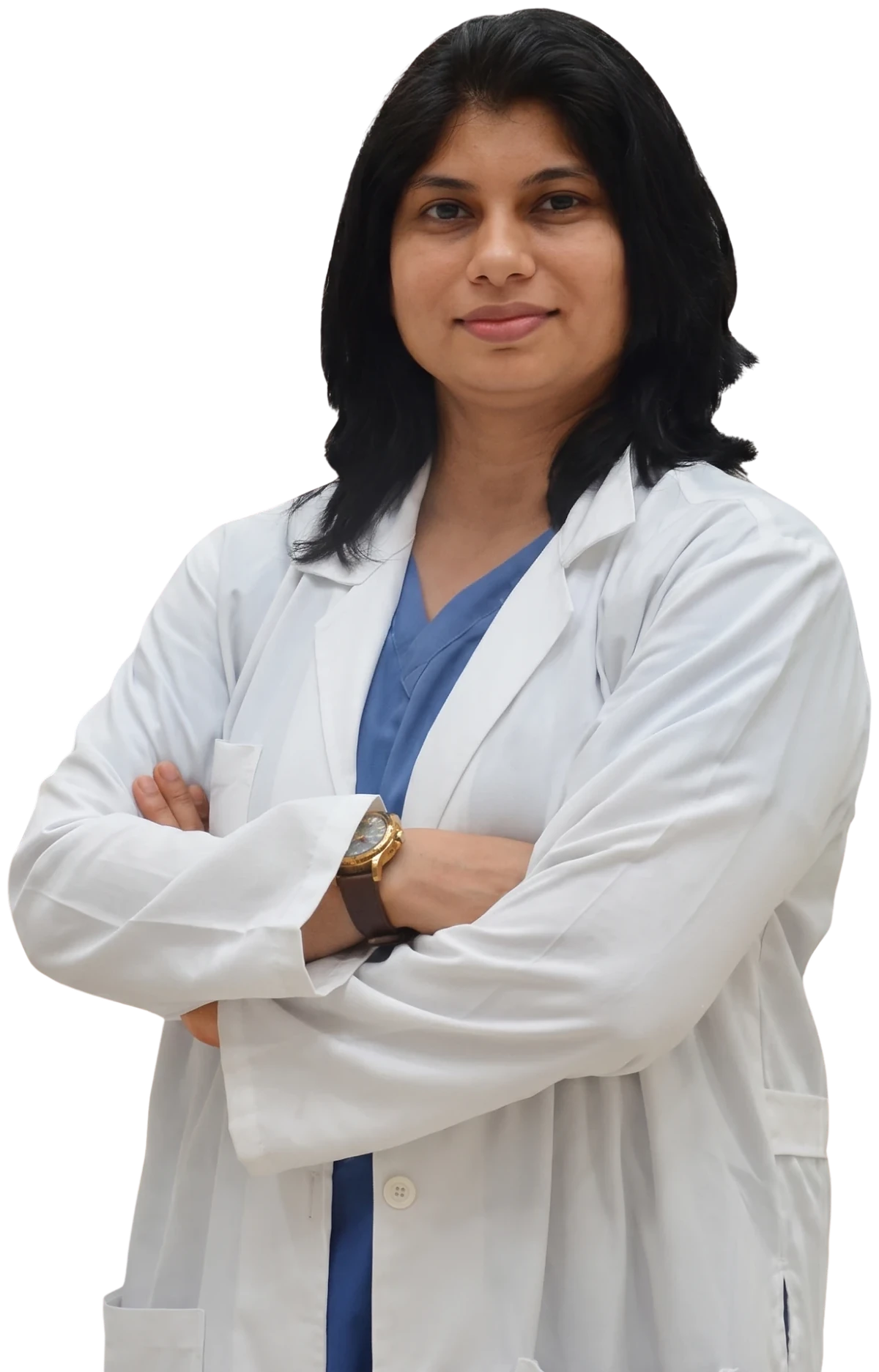
Why Dr. Neema Bhat
Transplant care led by a specialist
- US fellowship trainingFellowship (FAAP) in Pediatric Hematology, Oncology & BMT at Penn State Health.
- Leads a transplant unitProgram Director & HOD, Bone Marrow Transplant Unit, Bhagawan Mahaveer Jain Hospital.
- Access for familiesWorks with Sankalp India Foundation to make curative transplant reachable for children with thalassemia.
- One doctor, start to finishFrom the first evaluation to long-term follow-up, families know who is guiding their care.
Questions
Bone marrow transplant FAQs
What is a bone marrow transplant?
It replaces damaged or diseased bone marrow with healthy blood-forming stem cells. The new cells settle in the marrow and begin producing healthy red cells, white cells and platelets.
Is a bone marrow transplant only for cancer?
No. Besides leukaemia, lymphoma and myeloma, transplants are used for non-cancerous conditions such as thalassemia major, aplastic anaemia, sickle cell disease and some inherited immune disorders.
Who can be a donor?
For an allogeneic transplant, brothers and sisters are usually tested first — each full sibling has roughly a one-in-four chance of being a full match. Unrelated volunteer donors and half-matched (haploidentical) family donors may also be options.
How is a donor matched?
Donors are matched by HLA typing, a blood or cheek-swab test that compares immune markers between the patient and the potential donor.
Is donating stem cells safe for the donor?
For most healthy donors it is. Stem cells are commonly collected from the blood after a few days of growth-factor injections, and donors usually return to normal activities within days.
Is the stem cell infusion painful?
The infusion itself is given through a drip, much like a blood transfusion, and is usually not painful. The preparation (conditioning) and recovery phases need close care, which the team plans in detail with you.
How long is the hospital stay?
It varies with the type of transplant and the condition being treated. Hospital stays are commonly several weeks, until blood counts recover and the patient is well enough to go home.
What happens after discharge?
Regular follow-up visits, blood tests and medicines continue for months while the immune system recovers. The team guides the family on infection precautions, diet, vaccinations and returning to school or work.
General information only — every patient is different. Your consultation is the place for advice specific to you or your child.
Considering a transplant? Talk it through.
Bring your reports — Dr. Neema Bhat will explain the options for you or your child.